
Where should you start organizing?
Choose one drawer, one shelf or one corner of a closet, and aim to finish it in half an hour. A small win that you can see builds the momentum to keep going, and it teaches you how you sort before you take on a whole room.
How do you sort before you store?
Empty the space completely, wipe it down, and sort everything into four piles. Sorting first tells you how much you are really keeping, which is the only way to know what storage you need. Make each decision once, and put nothing back until the whole space is sorted.
- Keep: things you use and want.
- Donate: things in good shape that someone else can use.
- Toss: broken, expired or worn out.
- Belongs elsewhere: things that live in a different room.
What questions make sorting easier?
When you get stuck on an item, a few plain questions settle most decisions faster than holding it and hoping. Ask them in order and go with your first honest answer. If an item still feels undecided after all four, set it aside in a dated box and keep moving.
- Have I used this in the past year?
- Do I have another one that does the same job?
- Would I buy it again today?
- Does it have a home, or does it just land where there is space?
How do you give everything a home?
Store things where you use them. Keep what you reach for daily at arm’s height, move seasonal and rarely used things up high or to the back, and group like with like, so you never have to hunt for a second one. Measure the space once you know what is staying, and buy containers last.
Bigger homes are not immune. Walk-in closets and two-car garages, like many in Ballantyne and Huntersville, fill up just as fast as small ones, because there is always more room to set things down.
Where should you begin in each room?
Every room has one spot that causes most of the clutter, and starting there gives the fastest visible result. Clear that spot first, then work outward through the rest of the room. These are the usual trouble spots, and each one makes a good half-hour project on its own.
- Kitchen: the junk drawer and the food storage lids that no longer match anything.
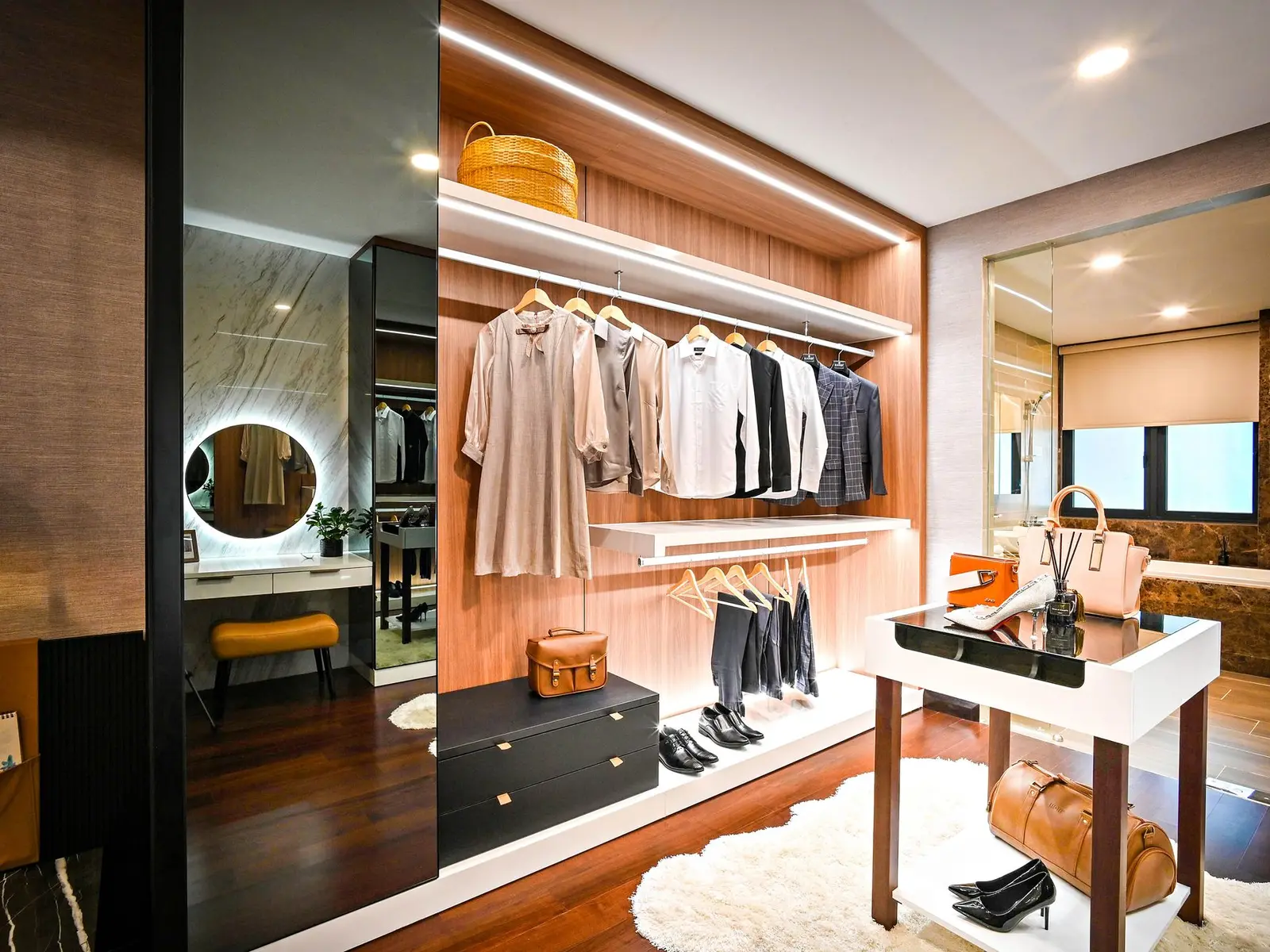
- Closet: pull out anything that does not fit or that you have not worn in a year.
- Entry: one hook or bin per person, so shoes and bags have a landing spot.
- Paper: one inbox for mail, and a short list of what actually needs to be kept.
- Bathroom: expired products and duplicates under the sink.
How do you keep a home organized?
Spend five minutes at the end of each day putting things back. Try one in, one out: when something new comes in, something leaves. Keep a donation bag by the door so giving things away is easy, and check what your local donation center takes before you load the car.
What do people ask next?
These are the questions that usually follow this one, each with a short answer you can act on.
How long does organizing a home take?
A single closet or pantry is usually a few hours, and a garage or a whole kitchen can take a full day or more. A drawer takes minutes, a closet an afternoon, and a whole house many short sessions spread over weeks. Working one small area at a time keeps it from stalling, and finishing each area completely keeps you from undoing your own progress.
Should I buy bins before I start?
No. Sort first, then measure and buy only what the remaining items need.
What if I cannot decide whether to keep something?
Put it in a box with a date on it and store it out of the way. If you have not opened the box in six months, you can likely let it go.